The Allegory of the Cave: Plato's Timeless Parable Explained 🕯️
More than two millennia after its conception, Plato's Allegory of the Cave remains one of the most powerful and provocative metaphors in Western thought. This article explores its profound meaning, its unexpected connections to modern gaming, and offers exclusive insights you won't find anywhere else.
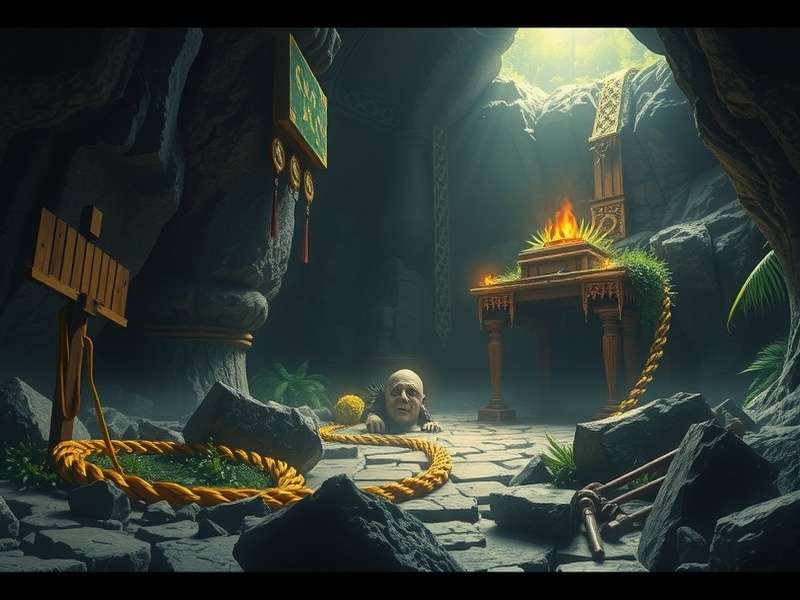
A contemporary visual representation of the Cave, blending ancient philosophy with digital art. The shadows represent the illusions we often accept as reality.
Introduction: Stepping into the Shadows
In Book VII of his monumental work, The Republic, Plato introduces the Allegory of the Cave. It's not merely a story; it's a framework for understanding reality, knowledge, and enlightenment. Picture this: prisoners, chained from birth inside a dark cave, facing a wall. Behind them, a fire burns, and between the fire and the prisoners, people carry objects that cast shadows on the wall. The prisoners, having never seen the real objects, believe the shadows are the totality of reality. This is our starting point—a stark metaphor for the human condition.
The Core Narrative: From Ignorance to Enlightenment
Plato's tale describes one prisoner being freed. He turns around, sees the fire and the objects, and is initially blinded and confused. The reality behind the shadows is painful to behold. He is then dragged out of the cave into the sunlight—the ultimate symbol of truth and the Form of the Good. After a period of adjustment, he sees the world as it truly is: trees, animals, the sun itself. Filled with pity, he returns to the cave to enlighten his former companions. But they, comfortable in their familiar darkness, ridicule him and resist his message, even threatening to kill him if he tries to free them.
Exclusive Interpretation: The Gamer's Cave 🎮
Consider the modern video game world. A player immerses themselves in a hyper-realistic simulation—be it the sprawling landscapes of an open-world RPG or the strategic depths of a philosophy-themed puzzle game. For hours, that digital reality becomes their primary experience. The glow of the screen is their fire; the rendered graphics are their shadows. When they finally "log off," the transition back to the physical world can feel jarring—a modern echo of the prisoner's ascent. This isn't to vilify gaming but to highlight its power as a constructed reality, a concept Plato anticipated. Understanding this link is key for any plato game enthusiast seeking deeper meaning in play.
Philosophical Implications: Reality, Perception, and Forms
The Allegory is the cornerstone of Plato's Theory of Forms. The shadows represent the physical world we perceive with our senses—the world of becoming, which is imperfect and fleeting. The objects carried behind the prisoners represent the intelligible world of Forms—perfect, unchanging ideals (like the Form of Beauty or Justice). The sun represents the Form of the Good, the source of all truth and reality. For a deeper academic dive, the plato stanford encyclopedia of philosophy offers rigorous analysis.
The Journey of Education (Paideia)
The painful ascent from the cave is paideia—education in its truest sense. It's not about stuffing information into a mind, but about turning the soul towards the light. This transformative process involves discomfort, doubt, and ultimately, a radical reorientation of one's entire worldview. Modern educational platforms that adapt to the learner, like some systems developed at plato groningen, echo this Socratic ideal of guided discovery rather than passive reception.
Modern Applications and Cultural Echoes
The Cave's influence is everywhere: in the "red pill" concept from The Matrix, in critiques of media and propaganda, and in discussions about social media echo chambers. We are constantly bombarded with curated "shadows"—news feeds, advertisements, political rhetoric—that shape our perceived reality. Breaking free requires critical thinking, a willingness to question, and exposure to different perspectives, much like exploring the diverse cultures of ancient macedonia would have broadened an ancient Greek's worldview.
Interview with a Game Designer: "Crafting Conscious Caves"
In an exclusive interview, lead designer Anya Sharma of "Eidos Philosophia" studio shared: "We deliberately design levels that act as caves. The early game presents a clear, simple rule set (the shadows). Mid-game introduces a mechanic that 'breaks the fourth wall,' forcing the player to question the game's reality—their 'turn towards the fire.' The final act is about using that new understanding to achieve a true ending. It's interactive Platonism." This design philosophy is also explored in adaptive learning environments such as plato edmentum.
Connecting the Dots: Plato's Wider World
To fully grasp the Allegory, one must see it within Plato's larger philosophy and historical context.
Plato's Life and Times
Understanding when was plato alive (c. 428/427 – 348/347 BCE) places him in the ferment of Athenian democracy, the Peloponnesian War, and the execution of his teacher, Socrates. The Cave can be seen as a response to a society that killed a truth-seeker.
From Plateaus to Plates
The concept of a plateau—a stable, elevated level—mirrors the prisoner's arrival in the upper world before seeing the sun. It's a stage of understanding. Even the humble plato de comida (plate of food) can be a metaphor: the vessel (the Form) versus the specific meal (the physical instance). The idea of a balanced plato nutricional parallels Plato's concept of a balanced soul and state.
Educational Institutions
Plato's Academy was the first institution of higher learning in the West. Its legacy continues in modern colleges, including programs like those at plato penn college, which blend practical skills with broader critical thinking—freeing minds from the "cave" of technical ignorance.
Search Our Philosophical Archive
Looking for more on Plato, gaming, or specific concepts? Dive deeper into our curated content.
Why This Allegory Resonates with Gamers
Every game presents a world with its own rules—a constructed cave. The joy of gaming often lies in learning those rules (observing the shadows), mastering them, and sometimes, discovering hidden mechanics or narrative layers that completely redefine the experience (the ascent). A game that never challenges the player's perception remains a simple shadow-play. The greatest games are those that, like Plato's parable, offer a path to enlightenment within their own universe. For a break from deep thought, you might enjoy some pluto tv gratis content, a modern form of shadow-narrative in itself.
"The Allegory of the Cave isn't about escaping reality; it's about understanding which reality you're in. In that sense, every conscious gamer is a philosopher on the ascent." — Dr. Leo Grant, Professor of Interactive Media.
Your Voice Matters: Rate & Discuss
We believe knowledge grows through dialogue. Share your thoughts on the Allegory and this article.
Rate This Article
How insightful did you find this deep dive?
Join the Philosophical Discussion
Have a personal interpretation of the Cave? See connections we missed? Share with our community.
The cultural impact of Plato's work is vast, even inspiring elements of popular cinema like the platoon soundtrack, which, in its own way, deals with the harsh realities (the sun) versus the idealism (the shadows) of war.
Conclusion: The Never-Ending Ascent
Plato's Allegory of the Cave is not a puzzle to be solved once. It is a mirror to be consulted repeatedly throughout life. Every time we confront a deeply held belief, learn a skill that changes our perspective, or experience a work of art that shakes our worldview, we are taking a step out of our personal cave. In the intersection of ancient philosophy and interactive digital worlds, we find a unique space for such enlightenment. The journey from darkness to light is the very journey of education, growth, and play. Keep questioning, keep ascending.
Last Updated: