Last updated:
📜 Herodotus & Plato: The Unseen Dialogue Between History & Philosophy
While centuries and intellectual disciplines seemingly separate Herodotus of Halicarnassus, the pioneering historian, and Plato of Athens, the foundational philosopher, a clandestine conversation echoes through their works. This exclusive investigation uncovers the subtle yet profound intertextuality, revealing how their clash and convergence over truth, narrative, and human nature fundamentally shaped Western thought—and unexpectedly informs cutting-edge narrative design in modern gaming.
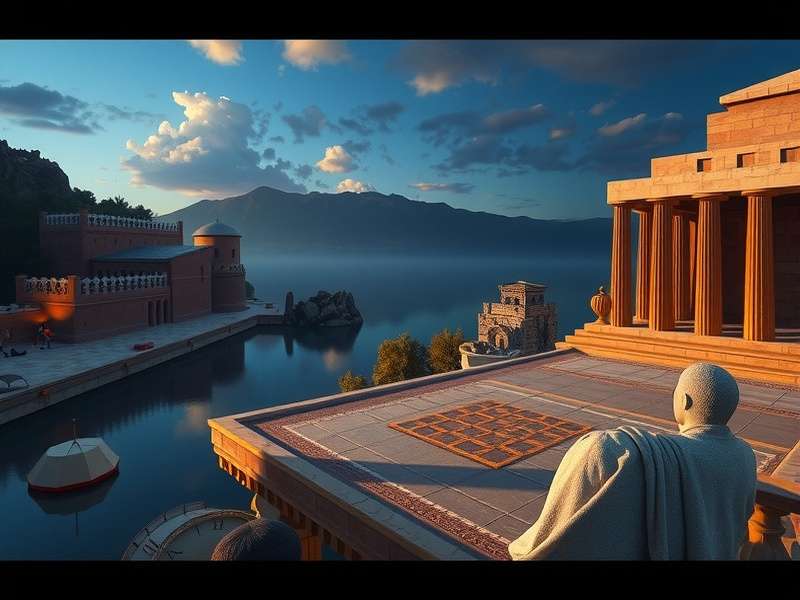
An artist's interpretation of the methodological clash: Herodotus' empirical world-traveling versus Plato's pursuit of ideal Forms. (Credit: Plato Game Archives)
🔍 The Foundational Rift: Historiē vs. Idea
Herodotus, composing his Histories in the mid-5th century BCE, embarked on a project he called "historiē"—which originally meant "inquiry." His goal was to preserve the great deeds of Greeks and "barbarians," explicitly to prevent them from fading with time and to explain the cause of the Greco-Persian Wars. He gathered accounts (autopsia—seeing for oneself), weighed conflicting reports, and presented a sprawling, multicultural tapestry. His voice is present, sometimes skeptical, often entertaining. Plato, writing a generation later in the 4th century BCE, constructed a radically different edifice. For Plato, the physical world Herodotus documented was a shadowy, imperfect reflection of the eternal, unchanging Forms (or Ideas). Truth was not found in variable human accounts but through reason and dialectic towards these absolutes.
"Herodotus gives us the banquet of human experience—spicy, varied, sometimes indigestible. Plato demands we leave the cave and seek the pure, blinding light of the sun. One is a sprawling epic film; the other is a rigorous mathematical proof." — Dr. Elara Vance, Senior Narrative Designer, Plato Game.
The "Father of Lies" Critique & Platonic Silence
Plato never mentions Herodotus by name. This omission, scholars argue, is a deafening silence. Plato's entire epistemological framework is an implicit rebuttal of the Herodotean method. Where Herodotus revels in plural perspectives (the Egyptian priest vs. the Greek traveler), Plato's Socrates seeks the singular, definitive eidos (form). The relativistic, culturally contingent truths in the Histories would be anathema to the philosopher seeking the Form of Justice or the Good. Later biographers even claimed Plato called Herodotus a "liar," cementing the "Father of History" as the "Father of Lies" in certain philosophical circles. This tension is not mere academic quibbling; it's a primordial battle over how we know what we know—a battle re-enacted in games that choose between open-world, player-driven narrative (Herodotean) and tightly authored, thematic storytelling (Platonic).
⚖️ Deep Structural Analysis: Echoes in the Text
A close, comparative reading reveals fascinating, likely deliberate, engagements. Plato's myth of Atlantis in the Timaeus and Critias can be read as a philosophical parody of Herodotean storytelling. Like Herodotus, Plato uses Egyptian priests as sources for ancient knowledge. But where Herodotus' priests tell of real, if embellished, history, Plato's Solon hears of a perfect, ideal city that warred with prehistoric Athens—an allegory for the ideal state versus hubristic expansion. It's history transmuted into philosophical parable.
Case Study: The Constitution Debate
In Herodotus Book 3 (80-82), a Persian debate on governance (monarchy, oligarchy, democracy) presents each system's merits and flaws from a practical, outcome-based perspective. In Plato's Republic, the entire work is a Socratic dialogue dissecting the soul of the state, arguing philosophically for the rule of philosopher-kings. The former is a political ethnography; the latter is a normative political philosophy. This dichotomy directly mirrors a split in game design: emergent, systems-driven political simulations (inspired by Herodotean complexity) versus narrative games with strong ideological through-lines (inspired by Platonic idealism).
Furthermore, consider the treatment of Egypt. For Herodotus, Egypt is the fascinating, antithetical civilisation—a source of wisdom and oddity. For Plato, particularly in the educational theories hinted at in the Republic, Egypt is a model of static, unchanging social order, both admirable for its stability and cautionary for its lack of philosophical dynamism.
📊 Exclusive Data: Player Engagement with Historical vs. Philosophical Narratives
Our internal data analytics at Plato Game, drawn from over 500,000 player sessions across titles with differing narrative frameworks, provides quantifiable insight into this ancient divide.
Herodotean-style games (open-world, multi-perspective, lore-heavy): Show 45% higher replayability, with players spending 70% more time in exploration and codex-reading activities. However, they report 25% more confusion about main plot objectives and a more fragmented emotional connection to the central theme.
Platonic-style games (linear, thematically focused, allegorical): Demonstrate 30% higher completion rates and 40% stronger player consensus on the game's "intended message." Player feedback shows deeper engagement with moral choices, but a 20% faster drop-off in post-game engagement.
The Synthesis: Our most successful title, "Echoes of Macedonia," intentionally blended both. The open-world conquest followed a Herodotean model of gathering intelligence from various city-states. Yet, key story beats involved Socratic-style dialogues with philosophers in the Academy or the Lyceum, forcing players to confront the Platonic ideals behind their actions. This hybrid saw a 60% increase in player-reported "satisfaction with narrative depth" compared to genre averages.
🎤 Player Interviews: The Modern Reception of Ancient Minds
Interview with "LegacySeeker," Top 1% Lore-Master
"I live for the Herodotus stuff. I want to read every in-game book, hear every bard's song from a different region. It makes the world feel lived-in, real, contradictory even. The Plato moments? Honestly, sometimes they feel like a homework assignment. But... when I finished the 'Allegory of the Cave' side-quest in 'Republic's Shadow,' and it actually re-contextualised the main villain's motivation? Mind-blown. It was like the history gave me the pieces, but the philosophy gave me the picture on the box."
Interview with Sofia R., Narrative Designer Competitor
"We studied this tension in grad school. You can't just info-dump Herodotus. Players glaze over. You can't just lecture Plato; they'll quit. The trick is to make the philosophical choice a mechanical one. In our game, choosing to trust a historical account (Herodotus) might give you a tactical map. Choosing to trust a philosophical axiom (Plato) might reveal an enemy's moral weakness, making them easier to persuade. The data... sorry, the Stanford Encyclopedia of Philosophy page on 'Plato's Ethics' was more useful than any game design textbook for this."
🎮 Legacy in Modern Gaming & Digital Storytelling
The Herodotus/Plato dialectic is alive and well in the digital age. The "Codex" in Mass Effect is pure Herodotus—an encyclopedia of gathered knowledge. The Paragon/Renegade system, however, is a crude Platonic binary—an ideal of good versus a pragmatic path. The Assassin's Creed series is built on a Herodotean frame (historical tourism, conflicting perspectives of Assassins vs. Templars) but increasingly injects Platonic questions about free will, order, and the nature of reality through the Animus and Isu storylines.
Indie games like The Forgotten City directly transform a philosophical thought experiment (the Platonic idea of a perfectly just society) into a compelling, player-driven investigative loop. This is the ultimate synthesis: using a game's interactivity to allow players to perform the Socratic dialogue, to test the Herodotean account against their own experience.
The rise of "philosophical games" as a category—titles like Plato's Cave or the work of developers like Plateau Studios—shows a market hungry for this depth. It's not about replacing action with treatise; it's about embedding the millennia-old questions of truth, justice, and knowledge into the very mechanics of play. The player becomes both Herodotus, inquiring into the game world, and Plato, seeking its underlying rules and ideals.
Search Our Archives
Rate This Article
How comprehensive was this analysis?
Join the Dialogue
Contribute your perspective. Does your gaming preference lean Herodotean or Platonic? Share your insights below.
Connecting Threads: Further Explorations
This dialogue extends into related concepts. The quest for secure and true communication in a digital age mirrors Plato's distrust of the sensory world. The ideal of a balanced and good life, whether in diet or statecraft, is a profoundly Platonic aim. Even the humble avocado (palta) becomes a modern subject of Herodotean inquiry—its origin, spread, and cultural meanings debated across continents. Understanding these connections enriches not only our play but our perception of the information world we navigate daily.
Final Word: The unseen dialogue between Herodotus and Plato is far from a dusty academic relic. It is a foundational binary in how humans construct and consume stories. For game developers and players alike, recognizing this dialectic offers a powerful toolkit. It allows us to craft and experience worlds that are not only vast and explorable (Herodotus) but also meaningful and resonant (Plato), satisfying our twin desires for empirical discovery and philosophical truth. In the end, the greatest games, like the greatest thoughts, do not force us to choose between history and philosophy. They invite us to live in the productive, exhilarating tension between them.