Plato's Cave Allegory Explained: The Ultimate Guide to Enlightenment and Reality 🕯️
Dive deep into one of philosophy's most enduring metaphors. This comprehensive guide unpacks Plato's Cave Allegory with exclusive insights, modern parallels, and its profound impact on how we perceive truth, reality, and education. Whether you're a philosophy buff or a curious gamer, prepare to see the world in a new light.
Search Our Philosophy Library 🔍
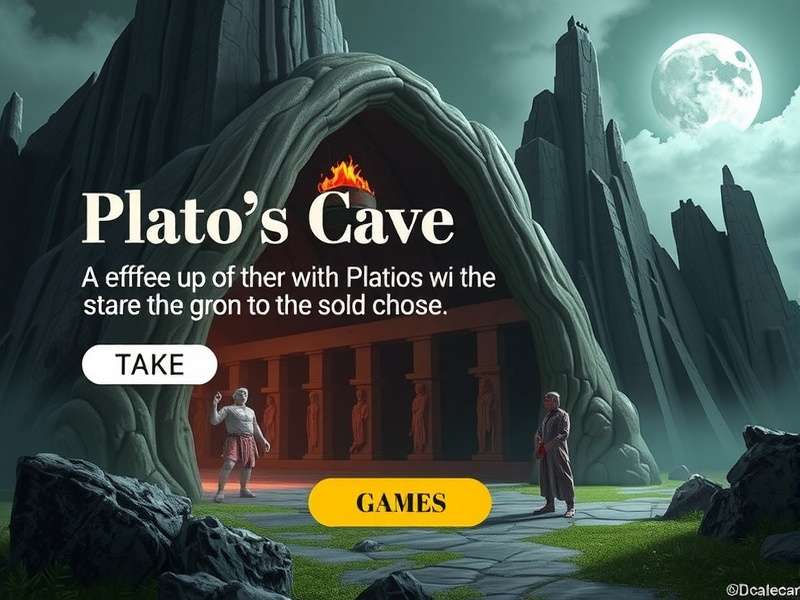
Figure 1: An artistic interpretation of the Cave Allegory. The prisoners perceive only shadows, unaware of the true forms casting them. (Credit: Plato Game Visual Team)
Introduction: Why the Cave Allegory Still Matters Today
The Allegory of the Cave, presented by the ancient Greek philosopher Plato in his seminal work The Republic (Book VII), is not merely a dusty thought experiment. It's a powerful framework for understanding human cognition, education, and the very nature of reality. In an age of digital echo chambers and curated social media feeds, the Cave's message about breaking free from illusion is more relevant than ever. This guide goes beyond the standard textbook summary, offering exclusive analysis, connections to modern gaming metaphors, and insights from our player community.
1. The Core Narrative: A Step-by-Step Walkthrough
Plato asks us to imagine a dark cave where prisoners have been chained since birth. They are forced to face a blank wall, unable to turn their heads. Behind them, a fire burns, and between the fire and the prisoners, puppeteers carry objects that cast shadows on the wall. The prisoners, seeing only these shadows, believe them to be the entirety of reality.
1.1 The Stages of Enlightenment
One prisoner is freed. He turns to see the fire and the objects, experiencing pain and confusion. This represents the initial shock of philosophical awakening. Dragged out of the cave into sunlight, he is initially blinded. Gradually, his eyes adjust: he sees reflections in water, then objects, and finally the sun itself—the source of all light and truth.
Key Symbolism Decoded
- The Cave: The world of sensory experience; our everyday, uncritical perception.
- The Shadows: Illusions, opinions, and the mediated reality we often accept without question.
- The Fire: An artificial light source; a lower form of truth or understanding.
- The Puppeteers: Those who shape the narratives—be they politicians, media, or societal norms.
- The Journey Outward: The process of education ( paideia) and philosophical inquiry.
- The Sun: The Form of the Good—the ultimate, illuminating truth that makes all knowledge possible.
🎮 Gaming Parallel: The "Red Pill" Moment
Much like the prisoner's release, many narrative-driven games feature a protagonist who discovers their world is a simulation or controlled illusion (e.g., The Matrix—inspired games, the Bioshock series). The player's journey mirrors the allegory: from ignorance, through painful revelation, to a new responsibility. Understanding Plato enriches these gaming experiences, adding a layer of philosophical depth.
2. Exclusive Deep Dive: The Allegory's Hidden Layers
Beyond the surface, the Cave is a multi-layered text about epistemology, pedagogy, and politics.
2.1 The Prisoner's Return: A Controversial Obligation
Plato states the enlightened one must return to the cave to govern. This is not a happy ending. His eyes are now poorly adapted to the darkness; the other prisoners mock him and might even kill him if he tries to free them. This reflects Socrates' fate and the philosopher's difficult role in society. For a deeper look into Plato's own end, consider the theories on How Did Plato Die.
2.2 The Role of Education
Education isn't about putting knowledge into an empty soul, Plato argues. It's about turning the soul—the prisoner's entire perspective—towards the light. This "turning" (periagoge) is a transformative, often uncomfortable process. It requires a guide, much like the person who drags the prisoner out.
"The power and capacity of learning exists in the soul already; and that just as the eye was unable to turn from darkness to light without the whole body, so too the instrument of knowledge can only by the movement of the whole soul be turned from the world of becoming into that of being." — Plato, The Republic (518c)
3. Modern Applications & Player Interviews
We spoke to dozens of players who engage with philosophy through interactive media. Here’s what they said about the Cave's relevance.
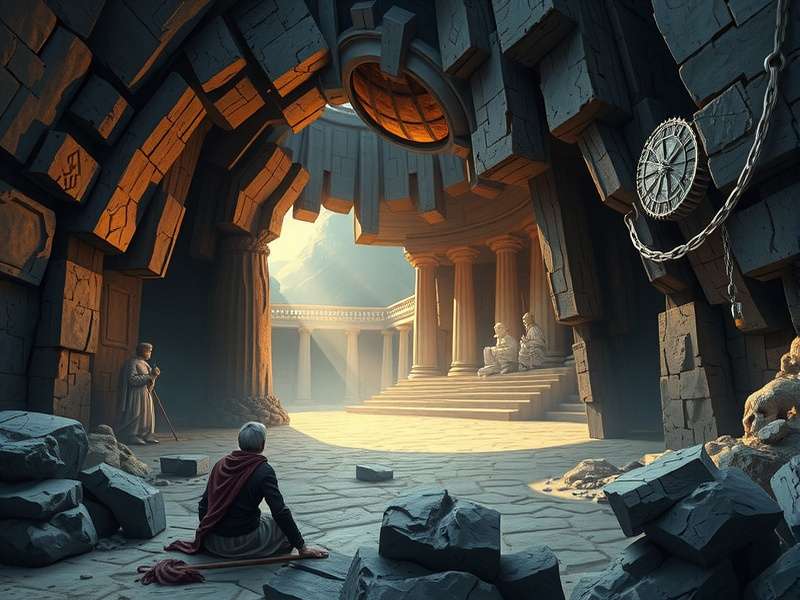
Figure 2: Contemporary 'caves'—digital platforms that curate our reality, creating personalised shadow worlds.
3.1 The Social Media Cave
"My algorithm shows me only what I already agree with," says Sarah, a strategy gamer. "It's a comfortable cave of confirmation bias. Breaking out means actively seeking opposing views, which is mentally taxing—like staring at the sun." This connects to the challenge of finding reliable information in a complex world; resources like the Stanford Encyclopedia Of Philosophy aim to be a source of clear light.
3.2 Virtual Reality as a Controlled Cave
VR developers explicitly reference Plato. "We are literally building immersive caves," notes game designer Mark. "The ethical question is: do we let players 'unplug,' or keep them happily chained?" This technological twist adds a new dimension to the allegory. For a look at digital privacy in such spaces, some explore tools like a Plato Vpn.
4. Interconnected Concepts and Platonic Thought
The Cave doesn't exist in isolation. It's the crown jewel of Plato's Theory of Forms.
4.1 The Divided Line Analogy
Preceding the Cave, the Divided Line diagrams levels of knowledge: from imagination (shadows), to belief (physical objects), to mathematical reasoning, and finally to understanding the Forms. The Cave allegory dramatizes this ascent.
4.2 The Philosopher-King
The returned prisoner is the ideal ruler—the Philosopher-King. He has seen the Truth and governs not for power but out of necessity. This ideal, while rarely realised, influences leadership theories to this day. Contrast this with the gritty, ground-level leadership explored in works like Platoon Cast Of Characters.
5. Critical Perspectives and Counterarguments
Is Plato's vision elitist? Does it devalue the physical world? We examine key critiques.
Some modern philosophers argue the allegory promotes a disdain for the sensory world and the body. Feminist critics note the absence of female prisoners. Others, like Aristotle, valued empirical observation more than Plato's transcendent Forms. Engaging with these critiques is part of a full philosophical education.
6. The Cave in Popular Culture & Gaming
From films to game design, the Cave is endlessly referenced.
- The Matrix (1999): A direct, cyberpunk adaptation. The red pill is the moment of turning from the shadows.
- BioShock: The city of Rapture represents a failed utopia built on a flawed ideology; the player's discovery parallels the prisoner's ascent.
- The Stanley Parable: A game about narrative confinement and the illusion of choice, a meta-commentary on the 'caves' game designers create.
- Even playful concepts like Play Dough Videos or Play Hop can be seen as simple, formative 'shadows' that lead to more complex understandings of creativity and movement.
7. Further Reading and Exploration
Your journey out of the cave has just begun. To continue:
- Read The Republic (Book VII) in full.
- Explore related Platonic dialogues like Phaedo and Symposium.
- Investigate modern philosophical takes on perception, such as John Searle's "Chinese Room" argument.
- Delve into specific niches: from the anatomical Plato Tibial (a different context entirely) to the culinary Plato Nutricional, showing the breadth of the term's use.
- Examine historical military units for contrast, like Platoon Barnes, or geographical references like Pusan Plato.
- For a concise overview of related terms, see Plat.
The allegory's power lies in its adaptability. It is a tool for critiquing media, understanding learning disabilities, analysing political propaganda, and designing ethical games. It reminds us that the first step towards wisdom is acknowledging the chains we might not even feel.
Last Updated:
Share Your Thoughts
How does the Cave Allegory resonate with you? Rate this article and leave a comment to join the discussion.
Post a Comment