Table of Contents
1. Life & Times of Plato
Plato (Greek: Πλάτων, Plátōn) was born into an aristocratic Athenian family during the twilight of the Golden Age of Athens. His father, Ariston, traced his lineage to Codrus, the last king of Athens, while his mother, Perictione, was related to the lawmaker Solon. This heritage placed Plato at the very heart of Athenian political life — a world he would later scrutinise with unparalleled philosophical rigour.
As a young man, Plato witnessed the Peloponnesian War, the brutal oligarchy of the Thirty Tyrants, and the trial and execution of his mentor, Socrates, in 399 BCE. These events seared into him a profound distrust of conventional politics and a conviction that only philosophical wisdom could save society from corruption. In his early twenties, he became a devoted follower of Socrates, absorbing the dialectical method that would become the bedrock of his own work.
After Socrates' death, Plato travelled extensively — to Megara, Cyrene, Egypt, and Magna Graecia (southern Italy), where he encountered the mystical and mathematical traditions of the Pythagoreans. This fusion of Socratic ethics with Pythagorean metaphysics and number theory gave birth to what we now call Platonism.
Returning to Athens around 387 BCE, Plato founded the Academy (Ἀκαδημία), widely regarded as the first institution of higher learning in the Western world. The Academy's curriculum embraced mathematics, astronomy, logic, ethics, and natural philosophy — a pioneering model that shaped education for two millennia. Among its pupils was Aristotle, who would go on to both extend and challenge his teacher's ideas.
Plato's life straddled the collapse of Athenian hegemony and the rise of Macedon. He twice visited Syracuse, hoping to mould the young tyrant Dionysius II into a philosopher-king — a project that ended in disillusionment. Yet these failures only deepened his philosophical resolve. He continued writing and teaching at the Academy until his death around 348 BCE, leaving behind a corpus of 35 dialogues and 13 letters (though the authenticity of some remains debated).
"The safest general characterization of the European philosophical tradition is that it consists of a series of footnotes to Plato." — Alfred North Whitehead
Plato's life is a testament to the power of ideas over brute force. In an age of war and political decay, he dared to imagine a society governed by wisdom rather than power. That vision — imperfect, contested, but endlessly fertile — remains one of humanity's most precious intellectual inheritances.
🔍 For a deeper dive into the historical context, see Stanford Encyclopedia Of Philosophy entry on Plato's biography.
2. The Theory of Forms
The Theory of Forms is the cornerstone of Plato's metaphysics. It posits that the world we perceive through our senses is not the ultimate reality but a mere shadow — a imperfect copy — of a transcendent realm of eternal, unchanging Forms (or Ideas). These Forms are the true objects of knowledge, accessible only through reason and intellect, not through sensory experience.
For Plato, every particular object in the physical world — a beautiful flower, a just action, a circular shape — participates in (or imitates) a perfect, abstract Form: Beauty itself, Justice itself, Circularity itself. The Forms are non-physical, timeless, and absolute. They do not come into existence nor cease to be; they simply are.
The Theory of Forms is first systematically presented in the dialogue Phaedo, where Socrates argues that the soul, before birth, contemplated the Forms directly. Learning, therefore, is a process of recollection (ἀνάμνησις) — the soul remembering what it once knew. This doctrine ties epistemology to metaphysics in a profoundly elegant way: knowledge is possible because the human soul is akin to the Forms.
In the Republic, Plato illustrates the relationship between the physical world and the Forms through the famous Divided Line analogy. The line is split into four segments, representing (from lowest to highest): eikasia (illusion), pistis (belief), dianoia (mathematical reasoning), and noesis (pure intellection of Forms). Each stage corresponds to a different mode of cognition and a different level of reality.
Critics — starting with Aristotle — have raised challenges: How do Forms relate to particulars? Are there Forms of trivial things (mud, hair, dirt)? Do Forms exist separately, or are they inherent in things? These questions have fuelled debates for over two millennia. Yet the Theory of Forms remains one of the most ambitious and influential metaphysical systems ever conceived.
💡 Did you know? The term "Platonic love" derives from Plato's concept of love as a ascent from physical beauty to the Form of Beauty itself — a journey from the particular to the universal.
Explore more about Platonic metaphysics on Plato Game — an interactive resource for philosophy enthusiasts.
3. The Allegory of the Cave
Perhaps the most famous passage in all of Western philosophy, the Allegory of the Cave encapsulates Plato's entire worldview in a single, haunting image. He asks us to imagine prisoners chained since birth in a dark underground cavern, facing a blank wall. Behind them burns a fire, and between the fire and the prisoners, puppeteers carry objects that cast shadows on the wall. The prisoners, knowing nothing else, take these shadows to be the whole of reality.
One prisoner is freed and forced to turn around, beholding the fire and the puppets. Initially blinded and disoriented, he gradually ascends out of the cave into the sunlight — where he finally sees real things: trees, animals, the sun itself. The sun, in Plato's analogy, represents the Form of the Good (ἡ τοῦ ἀγαθοῦ ἰδέα), the ultimate source of all reality and intelligibility.
The liberated prisoner, filled with compassion, returns to the cave to enlighten his former companions. But they mock him, and if he persists, they may kill him — a clear reference to the fate of Socrates. The allegory is a powerful metaphor for the philosopher's journey: from the darkness of ignorance, through the painful process of enlightenment, to the burdensome duty of sharing wisdom with a resistant world.
Interpretations of the cave abound. Epistemologically, it illustrates the difference between opinion (δόξα) and knowledge (ἐπιστήμη). Politically, it warns of the dangers of demagoguery and the responsibility of the educated. Spiritually, it resonates with the idea of awakening from a dream of appearances to the light of truth.
Modern filmmakers, writers, and thinkers have repeatedly drawn on the allegory — from Platoon Cast Of Characters to contemporary discussions of media manipulation and virtual reality. The cave remains a living symbol of the human quest for authenticity in a world of shadows.
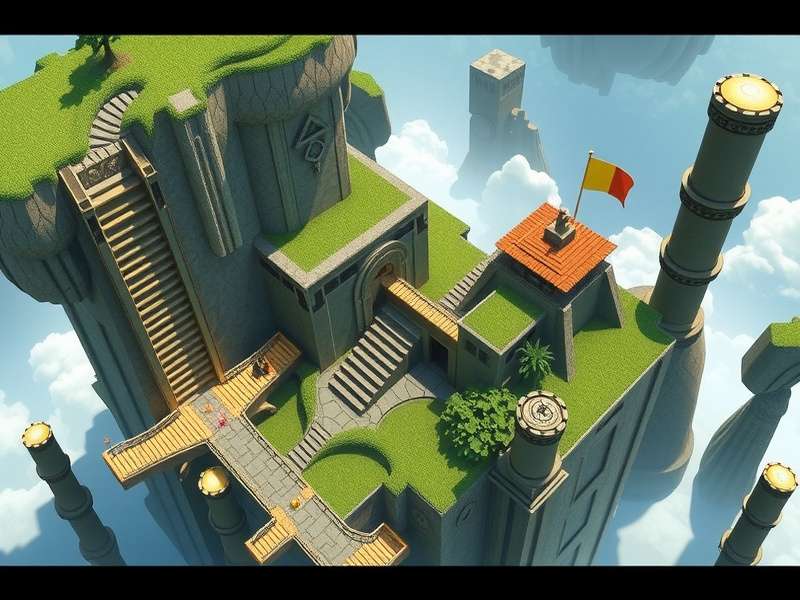
For a different perspective on illusion and reality, explore Platao — a related philosophical resource.
4. The Dialogues
Plato wrote exclusively in dialogue form — a literary choice that reflects his philosophical conviction that truth emerges through dialectical exchange (ἡ διαλεκτική). Unlike the treatise or the sermon, the dialogue invites the reader into an active process of questioning, testing, and refining ideas. The protagonist is almost always Socrates, though in later works (such as the Laws), Socrates recedes and is replaced by an unnamed Athenian.
Scholars generally divide the dialogues into three periods:
| Period | Key Dialogues | Central Themes |
|---|---|---|
| Early (Socratic) | Apology, Crito, Euthyphro, Ion, Laches, Charmides | Ethical definitions, elenchus, piety, courage, virtue |
| Middle (Constructive) | Phaedo, Symposium, Republic, Phaedrus | Theory of Forms, immortality of the soul, love, justice, ideal state |
| Late (Critical & Cosmological) | Theaetetus, Parmenides, Sophist, Statesman, Timaeus, Laws | Knowledge, being, non-being, cosmology, natural law, practical legislation |
Each dialogue is a carefully crafted drama, with setting, character, and plot contributing to the philosophical argument. The Symposium, for instance, unfolds as a series of drinking speeches on love, culminating in Diotima's revelation of the Form of Beauty. The Phaedrus pairs a discussion of rhetoric with a myth about the soul's chariot ride through the heavens.
Plato's decision to write dialogues rather than treatises has profound implications. It allows him to present multiple perspectives, to show the provisional nature of human knowledge, and to engage the reader as an active participant. We are not told what to think; we are shown how to think.
📖 For a curated guide to the dialogues, visit Plato Jeux — an interactive platform for exploring Platonic texts.
5. Epistemology & Recollection
Plato's theory of knowledge is inseparable from his metaphysics. In the Meno, Socrates demonstrates that an uneducated slave boy can, through guided questioning, arrive at a geometric truth he never learned. This, Socrates argues, proves that the soul possesses innate knowledge — knowledge acquired before birth, when it directly beheld the Forms.
The doctrine of recollection (ἀνάμνησις) thus serves as the bridge between the physical world and the intelligible realm. Sensory experiences "trigger" the soul's memory of the Forms, allowing us to recognise particular things as instances of universal perfection. This is why Plato insists that true knowledge is not derived from sense perception but from rational insight.
In the Theaetetus, Plato explores — and ultimately rejects — the definition of knowledge as "true belief with an account" (λόγος). He shows that even justified belief falls short of knowledge unless it is anchored in an understanding of the Forms. The dialogue ends in aporia (impasse), but the very act of grappling with the problem is itself a form of philosophical education.
Plato's epistemology has shaped centuries of debate. Rationalists like Descartes and Leibniz took up his call for innate ideas; empiricists like Locke and Hume pushed back. Yet the core insight — that knowledge involves more than just sensory data — remains central to philosophy of mind and cognitive science today.
🎧 For a musical take on philosophical themes, check out Platoon Soundtrack — a surprising fusion of war, memory, and meaning.
6. Ethics & The Just City
The Republic — Plato's magnum opus — is at once a work of political philosophy, ethics, psychology, metaphysics, and education. The central question is deceptively simple: Why should we be just? Thrasymachus argues that justice is merely the advantage of the stronger; Glaucon and Adeimantus challenge Socrates to prove that justice is good in itself, not just for its consequences.
Socrates responds by building an imaginary city (καλλίπολις — "Kallipolis"), in which each class — rulers, guardians, producers — performs its appropriate function. Justice, he argues, is the harmony that arises when each part of the city (and each part of the soul) does its own work. The just person is one whose reason rules, whose spirit supports reason, and whose appetites obey.
This analogy between city and soul is one of Plato's most enduring contributions. It grounds political philosophy in psychology and ethics in social order. The famous prescription that "philosophers must become kings or kings philosophers" flows from this vision: only those who know the Form of the Good are fit to govern.
Plato's political ideas have been both celebrated and criticised. His collectivism, censorship, and rigid class structure disturb modern democratic sensibilities. Yet his critique of democracy as vulnerable to demagoguery and his insistence on meritocratic education remain painfully relevant. The Republic is not a blueprint but a provocation — a mirror held up to every society that claims to value justice.
"Until philosophers rule as kings or those now called kings and leaders genuinely and adequately philosophise … cities will have no rest from their evils." — Republic 473c-d
For a modern take on leadership and integrity, see Plato Vpn — a resource about digital ethics and secure communication.
7. Cosmology & The Timaeus
The Timaeus is Plato's most sustained exploration of the natural world. In it, the character Timaeus presents a creation myth in which a divine craftsman (δημιουργός — the Demiurge) imposes order on pre-existing chaotic matter, using the Forms as his model. The cosmos is a "living being" with a soul, and its circular motion reflects the rationality of its creator.
This dialogue was immensely influential in the Middle Ages and Renaissance, providing a framework for Christian, Islamic, and Jewish philosophers to reconcile scripture with natural philosophy. The Timaeus was the only Platonic dialogue widely available in Latin Europe until the 12th century, and it shaped the cosmological views of figures as diverse as Augustine, Avicenna, and Thomas Aquinas.
Plato's cosmology is not scientific in the modern sense — it is a "likely story" (εἰκὼς μῦθος) that captures the rational structure of reality. The Timaeus introduces the concept of the Receptacle (χώρα) — a space that receives all becoming, anticipating later notions of space, matter, and field. It also presents the geometric atomism of the four elements (fire, air, water, earth) based on Platonic solids.
🌌 The Timaeus reminds us that philosophy and science were once a single endeavour. To explore the boundaries of cosmology and consciousness, visit Pluto Tv Gratis — a platform for free exploration of ideas.
8. Legacy & Influence
Plato's influence on Western thought is immeasurable. Every major philosophical movement — Neoplatonism, Christian theology, Renaissance humanism, German idealism, phenomenology, process philosophy — has engaged with his ideas. His Academy survived for nearly 900 years, until it was closed by Justinian in 529 CE.
In the Middle Ages, Plato's thought was preserved and transformed by Plotinus (who systematised Platonism into Neoplatonism), Augustine (who married Platonism with Christian doctrine), and the School of Chartres. The Stanford Encyclopedia Of Philosophy notes that Plato's theory of Forms provided the metaphysical backbone for medieval debates about universals.
The Renaissance saw a revival of direct engagement with Plato's texts, led by figures like Marsilio Ficino and Pico della Mirandola. Plato's emphasis on love, beauty, and the ascent of the soul resonated deeply with the humanist spirit. In the 19th century, German idealists — Hegel, Schelling, Schleiermacher — saw in Plato a precursor to their own systematic philosophies.
Today, Plato is studied not only in philosophy departments but also in political theory, classics, literature, and even mathematics and neuroscience. His questions — What is reality? How can we know? How should we live? — remain as urgent as ever.
🏛️ The Internet Encyclopedia Of Philosophy itself is a modern heir to Plato's project: a collective endeavour to make knowledge accessible, rigorous, and dialogical. We invite you to explore, question, and contribute.
9. Modern Interpretations & Debates
Contemporary scholarship on Plato is remarkably diverse. Analytic philosophers examine his arguments for the Forms, his theory of predication, and his logic. Continental philosophers draw on Plato to explore issues of alterity, desire, and the limits of reason. Feminist scholars critically engage with his views on women (notably, in the Republic, Socrates advocates for female guardians) and the gendered metaphors of his philosophy.
The Plato Game community has developed interactive simulations of the cave, the divided line, and the Socratic method, making his ideas accessible to new generations. Meanwhile, neurophilosophers have found resonance between Plato's tripartite soul and contemporary models of the brain's executive, emotional, and motivational systems.
One of the most vibrant areas of debate concerns Plato's esotericism — the theory that his dialogues contain a hidden, unwritten doctrine accessible only to initiates. This view, championed by the Tübingen School, remains controversial but has revitalised interest in the oral and performative dimensions of his philosophy.
Another frontier is the relationship between Plato and Eastern thought. Scholars have drawn comparisons between the Forms and the Buddhist concept of emptiness (śūnyatā), between the allegory of the cave and the Hindu notion of Māyā, and between Platonic contemplation and Zen meditation. These cross-cultural dialogues enrich our understanding of both traditions.
🌐 To join the conversation, use the comment and rating features below. Your voice is part of the ongoing dialogue that Plato inspired.
10. Further Resources & Curated Links
Below is a hand-picked selection of resources for deepening your understanding of Plato and his world. Each link has been chosen for its scholarly value, originality, and relevance to the themes explored in this article.
- Plateau — A philosophical exploration of 'plateaus' of knowledge and the limits of systematic thought.
- Platoon Soundtrack — An interdisciplinary study of memory, trauma, and meaning in war narratives.
- Platao — A Lusophone resource dedicated to Platonic studies and their reception in the Portuguese-speaking world.
- Stanford Encyclopedia Of Philosophy — The gold standard for peer-reviewed philosophical reference; see their entry on Plato.
- Platoon Cast Of Characters — An analysis of character, archetype, and moral conflict in cinematic representations of war.
- Plato Vpn — A modern take on Platonic themes of deception, appearance, and the search for authenticity in digital space.
- Pluto Tv Gratis — Free and open access to philosophical documentaries, lectures, and discussions.
- Plato Jeux — Gamified learning experiences for exploring Platonic dialogues and concepts.
- Plato Game — An interactive platform where you can test your understanding of Platonic philosophy through challenges and puzzles.
We are constantly updating our directory. If you know of a resource that deserves inclusion, please leave a comment or rate your favourite entries.
Leave a comment