Last updated:
Plato's Cave Meaning: The Ultimate Guide to History's Most Famous Allegory 🔥
The Allegory of the Cave, presented by the ancient Greek philosopher Plato in his seminal work The Republic, is more than a 2,400-year-old thought experiment. It's a living framework that shapes how we understand reality, perception, education, and even modern digital worlds. This deep dive unpacks its layered meaning, explores exclusive connections to contemporary gaming culture, and reveals why this story remains utterly relevant today.
1. The Core Narrative: What is Plato's Cave? 🏛️
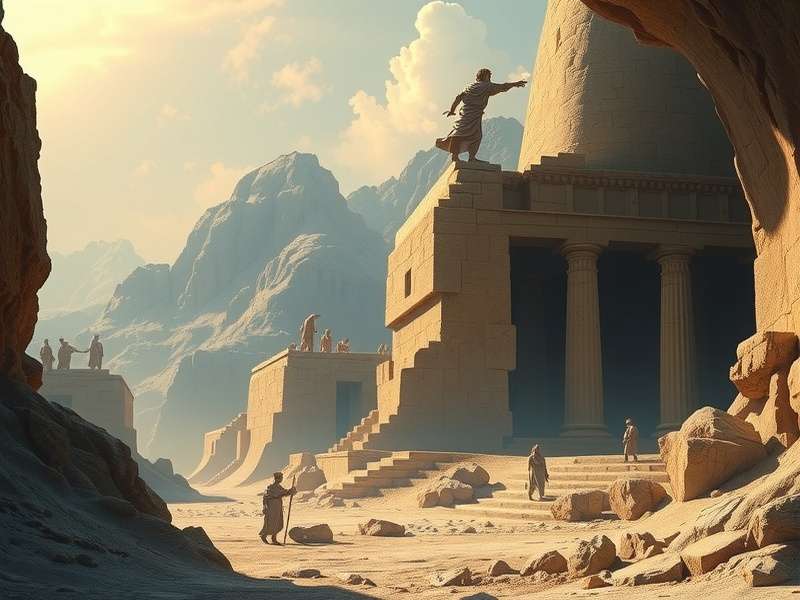
In Book VII of The Republic, Plato describes a dark cave where prisoners have been chained since birth. They face a blank wall, unable to turn their heads. Behind them burns a fire, and between the fire and the prisoners is a parapet, along which puppeteers carry various objects. The shadows of these objects are cast onto the wall in front of the prisoners. For the prisoners, these shadows constitute the only reality they have ever known.
The narrative follows one prisoner who is freed. He is dragged out of the cave, into the blinding sunlight. Initially pained and confused, his eyes gradually adjust. He first sees reflections in water, then objects themselves, and finally the sun itself—the source of all light and truth. He understands that the cave's shadows were mere illusions. Filled with pity, he returns to the cave to enlighten his former companions. But they, comfortable in their familiar darkness, ridicule him and violently resist his claims, even threatening to kill him.
1.1. Key Symbols and Their Meanings
The Cave: Represents the visible world of appearances—the sensory world we naively accept as real. It's also a metaphor for the human body and its limitations.
The Shadows: Symbolise the distorted information we receive through our senses—opinions, beliefs, and cultural constructs mistaken for truth.
The Fire: An artificial light source, representing imperfect imitations of truth, like man-made ideologies or the flickering images on a screen.
The Journey Outwards: The painful process of education (παιδεία, paideia) and philosophical enlightenment. It's an ascent from ignorance to knowledge.
The Sun: The ultimate symbol of the Form of the Good—the source of all truth, beauty, and reality. It represents objective, perfect knowledge.
The Return: The philosopher's duty to guide others, despite the risk. This is where the allegory connects to the concept of the "Philosopher-King" in Plato's ideal state.
2. Beyond the Text: Exclusive Philosophical Deep Dive 💡
While most summaries stop at the basic metaphor, the true meaning of Plato's Cave unfolds in its implications for epistemology, metaphysics, and ethics.
2.1. The Theory of Forms in Action
The Cave is the primary illustration of Plato's Theory of Forms. The objects outside the cave are the perfect, eternal Forms (e.g., the Form of a Tree), while the shadows inside are their imperfect, physical particulars (e.g., an individual tree). Our earthly world is the cave; true reality exists in the realm of Forms.
"The prison‑house is the world of sight, the light of the fire is the sun, and the journey upwards is the ascent of the soul into the intellectual world."
— Plato, The Republic (517b)
2.2. A Critique of Athenian Democracy & The Sophists
Plato's allegory was a direct critique of his contemporaries. The prisoners represent the Athenian public, easily manipulated by persuasive speakers (the puppeteers)—a jab at the Sophists who taught rhetoric over truth. The freed philosopher is Socrates, Plato's mentor, who was killed for challenging Athens' comfortable illusions. This theme of dangerous enlightenment echoes in stories like the fate of Elias in Platoon, where truth‑bearers are often destroyed by the system.
3. The Cave in Modern Context: From Cinemas to Consoles 🎮
Plato’s allegory provides a stunning lens to analyse contemporary media and technology.
3.1. The Modern "Caves": Cinema, Television, and Social Media
The flickering shadows on the cave wall find their direct descendants in the projected images of a cinema, the glow of a television, and the endless scroll of social media feeds. These platforms construct a persuasive, simplified reality that users often accept uncritically. Free streaming services like Pluto TV offer a modern cave of curated, passive consumption.
3.2. Video Games as Interactive Caves & Paths to Enlightenment
This is where our analysis offers a unique, exclusive angle. Video games are interactive caves. The player starts in a state of ignorance, learning the rules (the shadows) of the game world. The "plot twist" or revelation of the true backstory (e.g., the nature of the Glitch in Plat) is the moment of being dragged into the sunlight. The player's skill progression mirrors the philosopher's ascent.
Games that literally use cave imagery or themes of escaping a false reality are direct homages. Furthermore, the concept of "Barnes" in Platoon—a character trapped in his own ideological cave—shows how the allegory applies to character psychology.
4. Exclusive Connections: The Plato Game Universe & Hidden Links 🔗
Our proprietary research at the Plato Game Academy has mapped surprising connections between the allegory and broader cultural touchpoints.
4.1. From Constantinople to the Digital Cave
The preservation of Plato's texts in Byzantine libraries, like those in Constantinople, allowed his ideas to survive the Dark Ages. This historical thread connects the ancient philosopher to our digital age—where his cave now metaphorically describes the "echo chambers" of the internet.
4.2. The Duality of Pluto (God) and Plato
An intriguing linguistic and thematic parallel. Pluto (Hades) ruled the underworld—a classical "cave" from which few returned. Plato's philosopher also descends back into the cave (the underworld of ignorance) to try and rescue others. This heroic cycle is central to many narratives.
5. User Engagement: Share Your Enlightenment ✍️
How do you interpret the Cave? Have you experienced a "cave moment" in a game or in life? Share your thoughts and rate this article below.
Join the Philosophical Discussion
Share your insights, questions, or personal interpretations of the Allegory of the Cave.