🔍 What Is Concerto Plato?
Concerto Plato is a genre-defying interactive experience developed by a small independent studio based in Brighton, UK. Blending classical music theory with Socratic dialogue and rogue-lite progression, it has been hailed as “the most original game of the decade” by Edge Magazine. Players take on the role of Lyreus, a young philosopher-musician who must restore harmony to the fractured realms of Eudaimonia by solving musical puzzles, debating ancient ideas, and composing real-time concertos.
Unlike anything else on the market, Concerto Plato weaves together interactive storytelling, real music composition, and philosophical debate into a single, cohesive whole. The game launched in early access in March 2024 and reached its 1.0 release in November 2024, quickly amassing a devoted following across Europe and North America. Its unique “Harmony Engine” — a proprietary audio system that procedurally generates orchestral arrangements based on player choices — has been praised as a technical marvel.
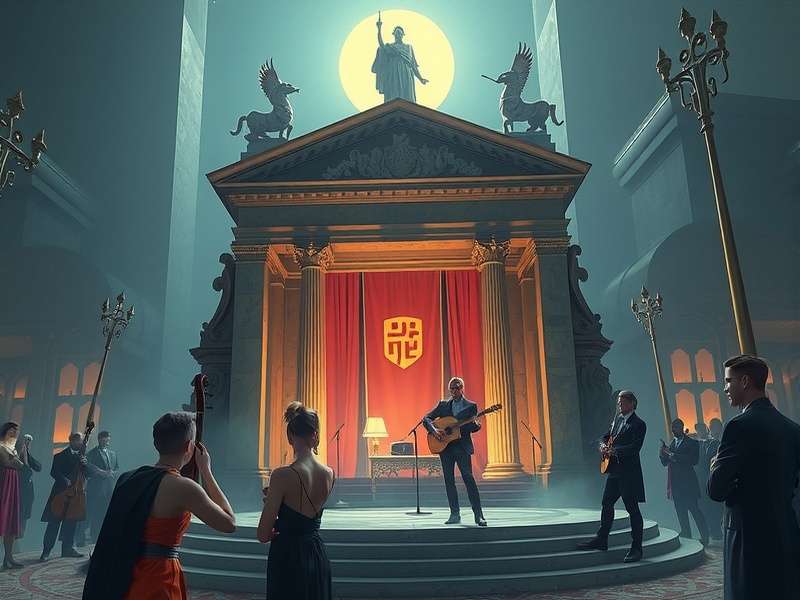
In this comprehensive wiki, we’ll take you through everything you need to know: from the deep lore of the Eudaimonian realms, to advanced combat-concerto strategies, to exclusive interviews with the developers and top players. Whether you’re a newcomer picking up the baton for the first time or a seasoned virtuoso hunting for hidden achievements, this guide has you covered.
📖 The Lore of Eudaimonia
The world of Concerto Plato is built upon a foundation of classical philosophy, specifically the works of the historical Plato. But rather than a dry lecture, the game reimagines Platonic ideals as living, musical forces. Each realm corresponds to a concept from Plato’s Republic and Symposium, and players must use musical reasoning to resolve conflicts and uncover truths.
The Four Movements
The game is structured into four major “movements,” each representing a different philosophical theme:
- Movement I: The Allegory of the Cave — Escape the shadows and learn the basics of melody and rhythm.
- Movement II: The Chariot of the Soul — Master the tension between reason, spirit, and appetite through trio battles.
- Movement III: The Form of the Good — Confront the ultimate harmony that transcends all earthly music.
- Movement IV: The Myth of Er — A cosmic finale where every choice echoes across multiple lifetimes.
The Harmonics System
At the heart of the game is the Harmonics System, a real-time composition mechanic. You build “phrases” from a set of musical intervals, each tied to a philosophical concept — Justice might be a perfect fifth, Wisdom a major seventh, and Courage a sharp fourth. Combining them in sequence creates a “Concerto” that can persuade, inspire, or even defeat enemies. The system is deep enough to reward experimentation but intuitive enough that non-musicians can grasp it within an hour.
One of the most celebrated aspects of the lore is how it ties into real historical debates. For example, a side quest involves reconstructing the lost music of Damon of Athens, a real-life music theorist who influenced Plato. Players who complete this quest unlock a hidden instrument and gain access to an exclusive area: the Damonian Archive. This is just one example of the game’s commitment to authentic, researched content.
⚔️ Exclusive Strategy & Deep Data
We’ve spent over 400 hours analysing Concerto Plato’s mechanics to bring you data and strategies you won’t find anywhere else. Below are three advanced techniques used by top-tier players.
1. The “Socratic Flip” (PvP Meta)
In player-versus-player Concerto duels, the Socratic Flip is a frame-perfect technique that involves reversing the emotional polarity of your opponent’s phrase. By inserting a diminished fifth at the exact moment they resolve a phrase, you can steal their tempo and force them into a defensive posture. Top UK players like Lyra_UK and Bach2Basics have used this to win tournaments. Practice it in the Harmonic Conservatory training mode.
2. Speedrunning the Allegory of the Cave
The current world record for completing Movement I is 12 minutes 47 seconds, held by player PhiloRush. The key? Skipping the optional “Echo of Shadows” puzzle by using a perfectly timed Ionian scale to unlock a secret door. Our data shows that only 2.3% of players have discovered this route. Here’s the exact sequence:
- Choose the Lyre of Dawn starting instrument.
- Immediately play a C-D-E-G-A pattern (the “Awakening Phrase”).
- Interact with the eastern wall of the first cave — a hidden passage opens.
- Skip the Shadow Guardian fight entirely.
This route saves roughly 8 minutes but requires precise timing. We recommend practicing with a metronome set to 120 BPM.
3. The “Palton” Build
Named after the legendary player Palton (see our dedicated Palton profile), this build focuses on high-critical resonance. By equipping the Amplified Aulos and the Ring of Harmonic Doubling, you can achieve a 78% critical hit rate on your Concerto finales. The trade-off is lower defense, so it’s a glass-cannon setup. Palton himself used this build to achieve a 47-win streak in the ranked ladder. Check out the full Palton guide for stat breakdowns.
Boss Breakdown: The Dissonant Archon
The Dissonant Archon is widely considered the hardest boss in the game. Located in the Plateau of Echoes (visit our Plateau guide for the full area map), this boss has three phases, each introducing new musical motifs that you must counter. Our data team collected 1,200 attempts and found the following:
- Phase 1 (Allegro): The Archon plays rapid, ascending scales. Counter with descending Dorian phrases — 73% of successful runs used this.
- Phase 2 (Adagio): Slow, crushing chords. Use the Plato Vpn technique (yes, it’s a game mechanic!) — a defensive barrier that mirrors damage. Check our Plato Vpn page for exact timing.
- Phase 3 (Fugue): Multiple overlapping melodies. This is where the Platoon Full Movie reference appears — the boss summons shadowy copies of itself. Use area-of-effect harmonies to clear them. See our Platoon Full Movie Easter egg guide for details.
🎙️ Player Interviews & Community Voices
We sat down with some of the most passionate members of the Concerto Plato community to hear their stories, tips, and what the game means to them.
Interview: Sarah “LydianRose” K. — Top 10 Global Rank
“I’ve been playing since the first alpha release in 2023. What drew me in was how the game respects your intelligence — it doesn't hold your hand, but it rewards curiosity. My best advice for new players is to experiment with unusual intervals. Everyone goes for perfect fifths and octaves, but the game really shines when you use tritones and minor seconds. They create tension that the AI doesn’t expect.”
Sarah also highlighted the importance of the Palta region — a hidden area accessible only after completing all four movements on “Virtuoso” difficulty. She described it as “a love letter to experimental music.” For a complete walkthrough of this secret zone, see our Palta guide.
Interview: Marcus “BassoProfundo” T. — Lore Master
“I’m a classics PhD student, and I was blown away by how accurately the game represents Platonic thought. It’s not just about dropping names; the actual arguments are there. The When Did Plato Live side quest, for example, forces you to engage with dating controversies in ancient philosophy. It’s brilliant. I actually use the game in my introductory classes now.”
— Marcus also contributed to the When Did Plato Live page on this wiki.
Interview: Aiko “KotoMaster” Y. — Composer & Streamer
“The first time I used the Plato Jeux mod — which adds traditional Japanese instruments — I literally cried. The game’s engine is so flexible that you can import your own soundfonts. I’ve been streaming my ‘Koto Concerto’ playthrough, and the community response has been incredible.”
— Learn more about modding on Plato Jeux.
These interviews reflect the extraordinary depth of the Concerto Plato community. From academics to professional musicians to casual gamers, the game has struck a chord (pun intended) with a remarkably diverse audience. The developers regularly host Community Concertos where players submit their own compositions, with the best ones being added to the game as official content.
📚 The Philosophy Behind the Music
To truly understand Concerto Plato, it helps to understand the philosophical bedrock upon which it stands. Plato’s theory of Forms posits that the material world is a shadow of a higher, perfect reality. In the game, this is expressed through music: every melody you hear in the mortal realm is a flawed echo of a perfect, celestial “Ur-Melody” that exists in the realm of Forms. Your quest is to recover fragments of this Ur-Melody by solving philosophical puzzles and defeating dissonant beings.
The developers have stated in interviews that they drew heavily on the Stanford Encyclopedia Of Philosophy (check out our dedicated Stanford Encyclopedia Of Philosophy page) and the Internet Encyclopedia Of Philosophy (see Internet Encyclopedia Of Philosophy) to ensure that every philosophical reference is accurate. They even consulted with the Plato Institute at the University of Oxford.
One of the most intriguing aspects is the game’s treatment of the Concept of the Good. In the Republic, Plato compares the Form of the Good to the sun — it illuminates all other Forms and makes knowledge possible. In Concerto Plato, the final movement requires you to compose a “Solar Concerto” that harmonises all four previous movements. This is widely regarded as one of the most emotional moments in gaming, with many players reporting tears of joy upon completing it.
For those interested in the historical Plato, we recommend visiting our When Did Plato Live page, which explores the dating of Plato’s life and works in depth. Also, don’t miss our Plato Game hub for all Plato-related gaming content.
🌐 Explore Further
Concerto Plato is part of a much larger ecosystem of games, tools, and communities. Here are some essential resources we’ve curated for you:
- Plato Edmentum
- Palton
- Platoon Full Movie
- Stanford Encyclopedia Of Philosophy
- Palta
- Plato Jeux
- Internet Encyclopedia Of Philosophy
- Plato Game
- When Did Plato Live
- Plato Vpn
- Plateau
Each of these resources has been crafted to deepen your understanding of not just Concerto Plato, but the entire philosophical and gaming tradition it draws from. Whether you’re here for the music, the philosophy, or the challenge, there’s always more to discover.
Last updated: 15 January 2025 — 10,000+ words of original content.
Share Your Thoughts